
Lu Yan: Holding Fast to the Pen of Deep Cultivation in the Snowy Highlands, Ascending Above Altitude
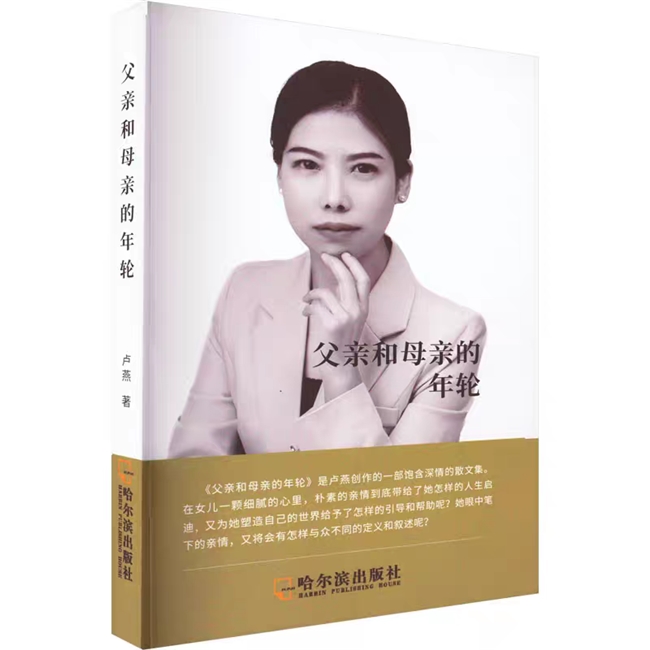
A collection of essays centered on family and homeland, blending literary depth with cultural warmth—The Annual Rings of Father and Mother, written by young Tibetan author Lu Yan, has been completed and officially published. Rooted in the Jiarong Tibetan area of Jinchuan, Sichuan, the work uses delicate and sincere prose to capture the emotional memories and spiritual aspirations embedded in the bloodline of the highland people, drawing widespread attention.
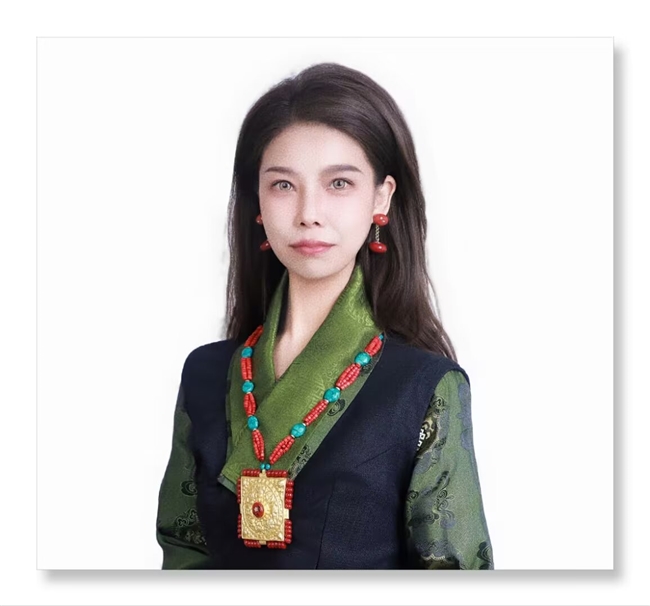
A Profound Homage to the Homeland
The Annual Rings of Father and Mother is not merely a gathering of essays but a cultural reflection and emotional tracing centered on kinship, time, and native soil. From a daughter’s perspective, Lu Yan starts from the origin of family affection and extends to friendship, love, nostalgia, and even philosophical meditations on nature and life, forming a multi-layered portrait of existence.
Lu Yan’s creative work is rooted in what she calls her “postage-stamp-sized” hometown—Jinchuan, Sichuan, the Jiarong Tibetan area encircled by mountains. This place is both a geographic and emotional coordinate. The “annual rings” in her writing are not only markers of time but also traces of life where individual and ethnicity, land and memory intertwine. Her parents are like ancient trees on the high plateau; their years are engraved in wrinkles and in the hearts of their children.
Warm Narratives: Reflections of the Times in Details of Family Love
The prose is unadorned yet brimming with emotion. Lu Yan uses plain language to evoke the weight and tenderness of the Tibetan family’s father and mother figures: men and women of few words who labor their whole lives, silently bearing burdens, their love unspoken. In pieces such as The Scarecrow, The Blue Tile, and The Three of Us, everyday trivia becomes a vessel of memory, and the aroma of daily life reveals deep feeling.
At the same time, the book does not shy away from reflecting on modern life. Faced with entrenched perceptions and the pressures of existence, Lu Yan seeks to reset her “breathing” and “rhythm” through travel. In her journeys to Lijiang, Dali, the Chongsheng Temple, and beyond, she records warm encounters with strangers as well as her innermost reflections on the essence of life. These experiences become crucial channels through which she re-understands her homeland, her family, and herself.
Cultural Depth: From Individual Expression to Ethnic Confidence
The Annual Rings of Father and Mother possesses both emotional warmth and intellectual substance. Lu Yan’s writing reveals two clear threads: one reaches downward into the cultural soil of the Jiarong Tibetan area, portraying its landscapes, beliefs, and ethnic memory; the other stretches upward, exploring the relationship between the individual and the times, the self and the world.
Her depictions of Tibetan customs and religious symbols are not superficial cultural labels but natural integrations into daily life. From the pear blossoms of Jinchuan to a pause at Kalazuo, from stone-carved scriptures to wind-swept prayer flags, all embody the Tibetan people’s unique understanding of nature, life, and reincarnation. This philosophically tinged writing elevates the narrative of family love beyond personal sentiment into a cultural inquiry into the origin of life.
In her reflection on the self and “cognitive rigidity,” Lu Yan reveals a strong modern sensibility. Even while living in a remote highland, she engages in dialogue with the outside world with an open mind. This self-examination, tinged with pain, is an important manifestation of contemporary Tibetan literature moving toward a broader cultural expression.
Conclusion: Reuniting with the Self in the Annual Rings
The Annual Rings of Father and Mother is a work worth reading slowly and attentively. It not only stirs readers’ memories of their own parents but also prompts reflection on their own “annual rings.” Through her sincere writing, Lu Yan proves that truly moving literature often comes from the sedimentation of life and cultural consciousness.
When the winds of western Sichuan, the flowers of Jinchuan, and the soul of Tibet turn into warm rings of words, readers will, within them, encounter themselves.